
Table of Contents
In the world of hairless cats, the appearance of the skin is a direct reflection of what is happening inside the body. Whether your companion is a Sphynx, Don Sphynx, or Peterbald – their skin is an organ working at its highest capacity. In this article, we will explain why hairless cat skin care begins in the bowl and how to protect this sensitive epidermis from the sun and frost.
Diet vs. Sebum Production – Why Is Your Cat “Dirty”?
Excessive amounts of sticky, dark earwax and skin secretions are often not the fault of infrequent bathing, but rather nutritional errors. The skin of a hairless cat reacts to low-quality protein and grain fillers with increased production of tallow (technical term: sebum) with an intense odor.
- Fuel for the skin: Hairless cats have an extremely fast metabolism (technical term: basal metabolic rate) because they use a vast amount of energy to maintain body warmth. They require a high-protein and high-fat diet.
- Omega-3 and 6 fatty acids: These determine the elasticity of the epidermis. If your cat’s skin feels parchment-like and dry, it is a sign that the lipid barrier requires support from the inside.
Tip: If, despite a proper diet, the skin is locally dry (e.g., from radiators), support it externally by using Daily Protective Cream.
Sun – Friend or Foe?
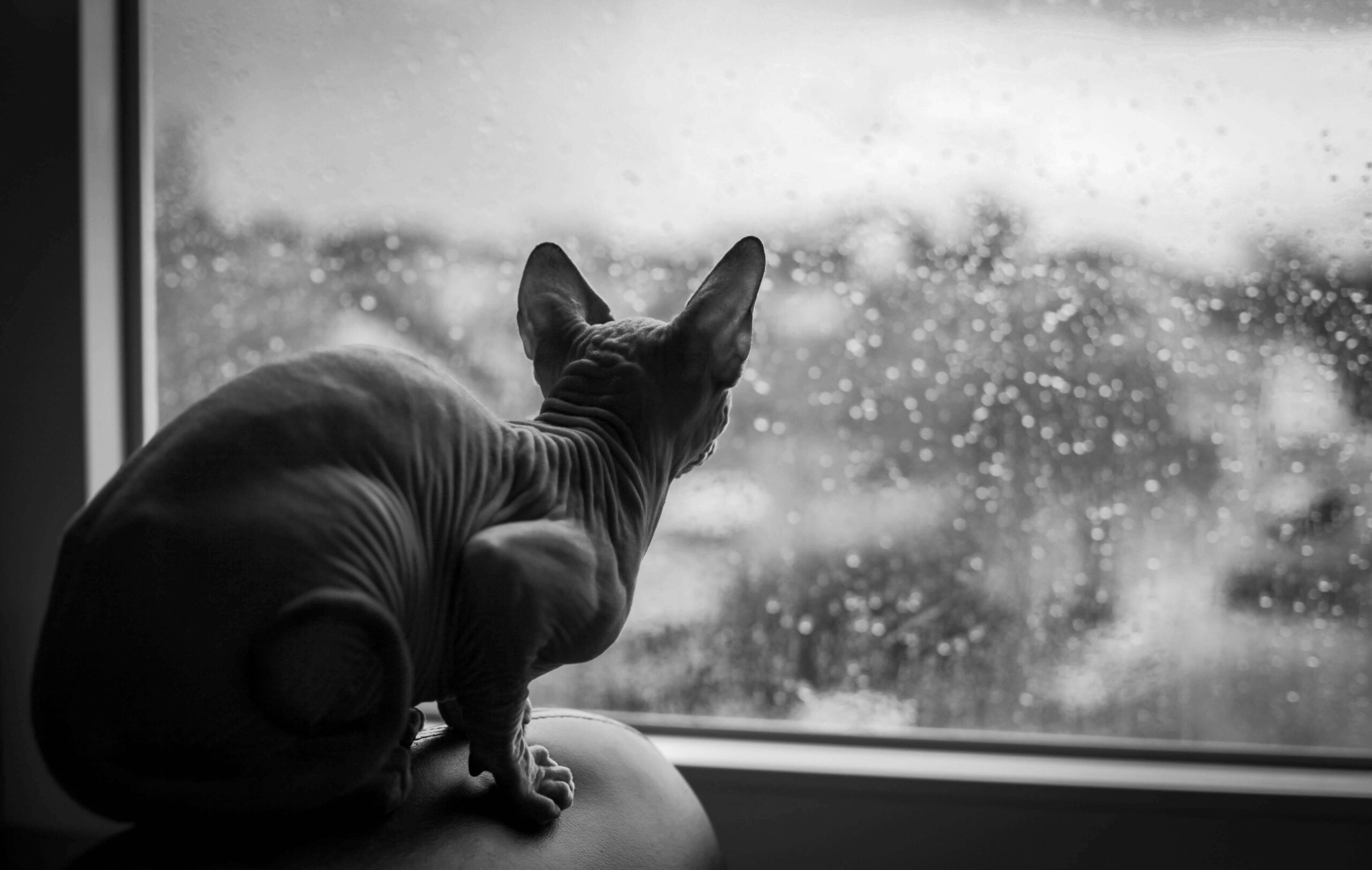
Hairless cats love basking in the sun, but their skin “remembers” every burn. A lack of fur means a lack of a natural UV filter.
- Cat suntan: Hairless skin darkens when exposed to the sun, which is a natural defensive process (technical term: melanogenesis). However, excessive exposure leads to painful burns and serious dermatological conditions.
- Sun safety: Avoid exposing your cat to direct sunlight between 11:00 AM and 4:00 PM. If your pet has a fair complexion, protect them with lightweight clothing, such as our Sweatshirt.
- After-sun care: After a day spent in the sun, the skin needs soothing. SOS Rescue Cream works perfectly as a regenerating compress for reddened areas.
Clothing – Fashion or a Foundation of Protection?
For owners of breeds like the Sphynx or Lykoi, clothing is not a gadget, but a piece of accessories for hairless cats with medical significance.
- Thermoregulation: In winter, clothing protects against hypothermia; in summer, it shields from UV rays.
- Home hygiene: Clothing, like our Tracksuit (Jersey fabric), absorbs excess sebum, keeping your furniture and bedding clean.
- Mechanical protection: It prevents scratches during play, which occur easily on unprotected skin.
Care vs. Seasons
Your routine should adapt to the weather:
- Winter: The heating season is a time to fight dryness. Use Gentle Skin Shampoo, which does not dehydrate the skin, and ensure regular moisturizing with a cream.
- Summer: This is a period of increased perspiration. Instead of bathing your cat every day, opt for frequent skin refreshing using No-Rinse Cleansing Gel – this will prevent the formation of blackheads (technical term: comedones) during hot days.
Summary – Health in Balance
Comprehensive hairless cat care is a triangle: High-quality diet + External protection + Professional cosmetics. Only this combination guarantees that the skin remains elastic, clean, and free from inflammation.
Remember that every cat is different – observe your skin’s reactions to new food or cosmetics. At Sphynx Rituals, we create products that support this natural balance, regardless of what is happening outside your window.