
Table of Contents
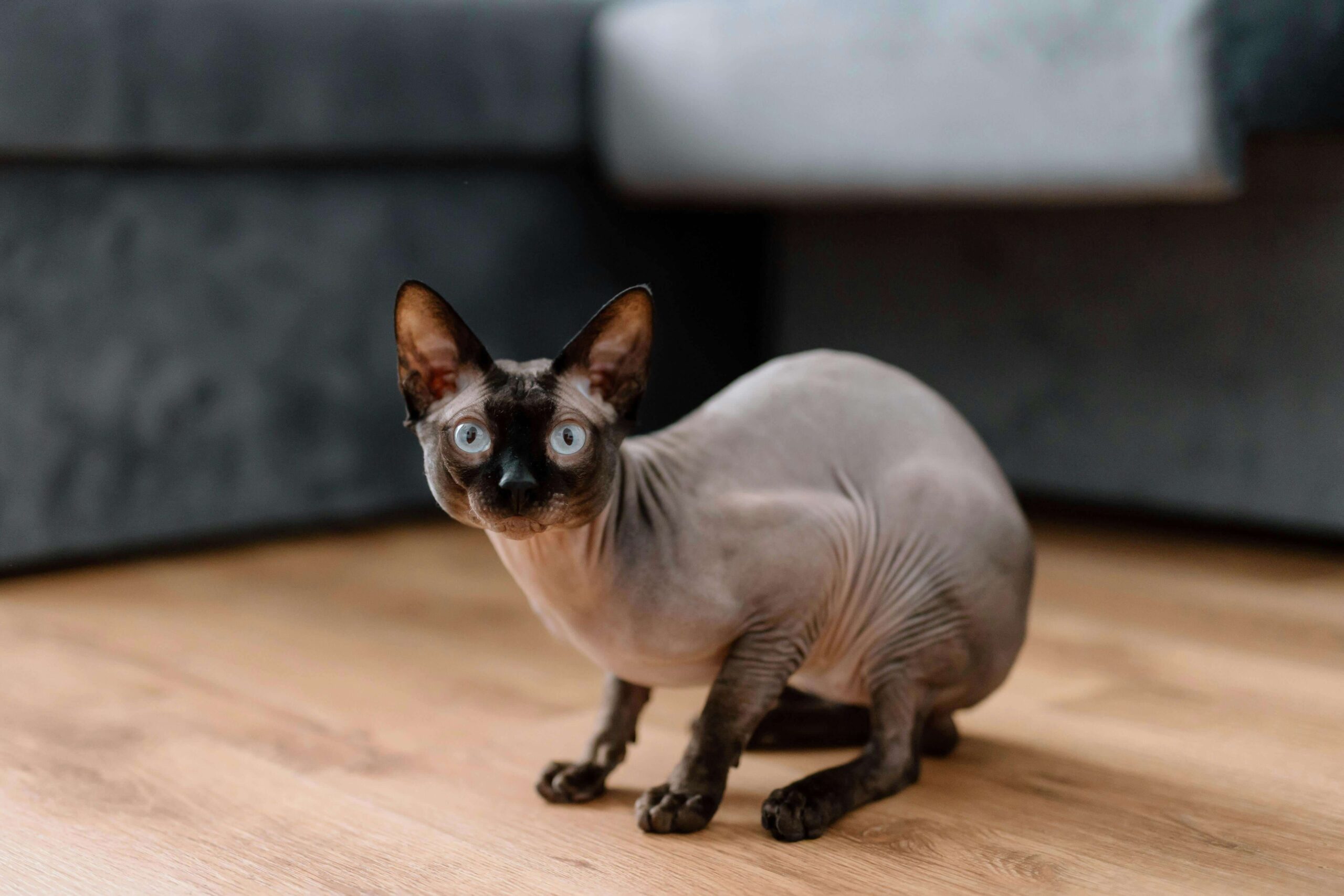
When the temperature outside drops and we turn up the radiators, the skin of our hairless cats faces one of the greatest challenges of the year. Dry air in our homes drastically reduces epidermal moisture levels, leading to the so-called “parchment effect” – the skin becomes rough, less elastic, and feels like dry paper to the touch.
At Sphynx Rituals, we know that winter care requires a change of strategy. Learn how to protect your pet from dehydration and discomfort.
Why Do Radiators “Pull” Water from the Skin?
Hairless cats lack the fur barrier that would trap moisture close to the body. During the heating season, indoor humidity often drops below 30%, causing a rapid escape of water from the epidermis (technical term: TEWL – Transepidermal Water Loss).
Symptoms that should concern you:
- The skin is dull and loses its natural “velvety” feel.
- Fine scaling or flaking appears (especially on the back and ears).
- The cat scratches more frequently, despite the absence of parasites (technical term: pruritus).
- Sebum becomes thicker and more difficult to remove.
Strategy 1: Moisturizing Is Your New Shield
In winter, washing alone is not enough – you must actively replenish the protective barrier.
- The Solution: Daily Protective Cream is the absolute foundation of a winter routine. It contains ingredients that act like a “liquid blanket,” binding water in the epidermis and preventing evaporation (technical term: humectant and occlusive action). Apply it daily, paying special attention to the sides of the body and the tail.
Strategy 2: Bathing Without Drying Out
Most traditional shampoos, combined with hard, hot water, drastically worsen the condition of dry skin.
- Sphynx Rituals Ritual: In winter, shorten bath times and lower the water temperature. Use only Gentle Skin Shampoo, which has a lipid-based formula. If the skin is extremely dry, opt for No-Rinse Cleansing Gel between baths – it allows you to maintain cleanliness without contact with dehydrating tap water.
Strategy 3: Mechanical Protection (Layering)
During the heating season, clothing acts as an insulator. However, beware: synthetic materials (e.g., cheap polyester) can generate static electricity and further irritate dry skin.
- Expert Choice: Opt for natural fabrics. Our Tracksuit or Sweatshirt made of high-quality cotton allows the skin to breathe while protecting it from sudden temperature spikes (e.g., when a cat moves from a warm radiator to a cold floor).
Strategy 4: SOS for Cracking Ears
Ears are the thinnest part of a cat’s body and are the first to react to dehydration.
- The Rescue: If you notice the edges of the ears becoming hard or reddened, immediately apply SOS Rescue Cream. This is an intensive treatment that restores epidermal elasticity and prevents painful cracking (technical term: fissuring).
Supportive Home Hacks:
- Air Purifier and Humidifier: This is the best gift you can give your cat’s skin. Optimal humidity is around 50%.
- Fat-Rich Diet: In winter, it is worth consulting a veterinarian about adding fish oils (Omega-3), which build skin resilience from the inside out.
Summary – Winter Doesn’t Have to Mean Rough Skin
The “parchment effect” is a signal that your cat’s natural protective barrier has stopped functioning. Properly selected hairless cat cosmetics and attention to environmental humidity will allow your pet to go through the heating season in full comfort. In winter, healthy skin should remain warm, soft, and supple – exactly what the Sphynx Rituals routine provides.